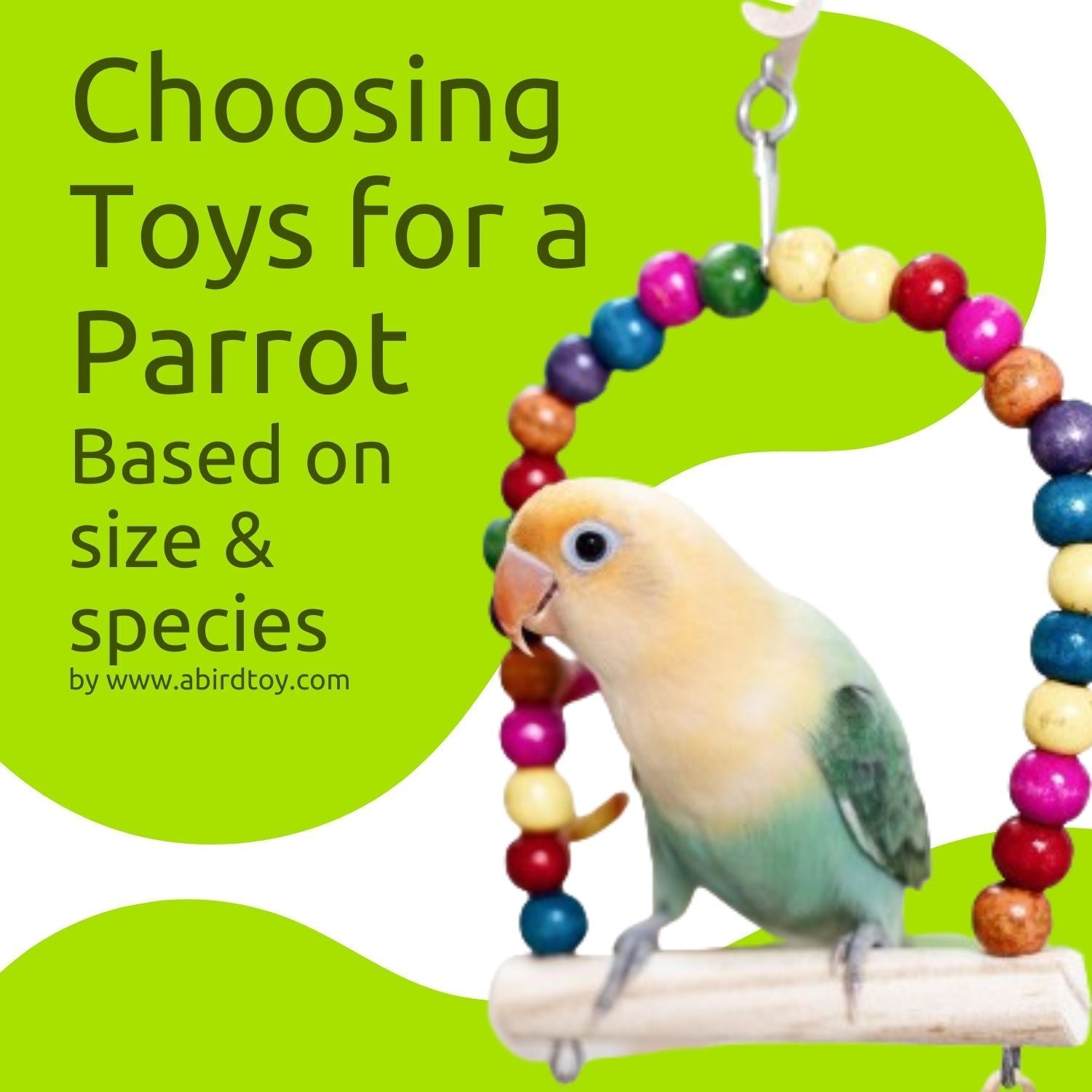
Did you know that parrots are highly playful beings? Like dogs and cats, our birds need toys to play with in order to prevent boredom and to allow them to burn off their excess energy. But which of the literally hundreds of parrot toy types will work for your specific feathered friend?
Here's how you choose the right toy for your parrot—and why it's important.
Why does my parrot need toys?
If so many of our parrots never play with their toys, rip them apart instantly, or even seem terrified of the playthings we give them… then what is the point?
Busy birds
It's important to keep in mind that our feathered friends evolved to be champion food finders. They're pretty brainy compared to many other birds, and their strong beaks and dexterous feet ensure they can efficiently extract and handle any morsel they happen to find. The process of locating and obtaining food is called foraging, and in the wild, it occupies much of a parrot's day. When they've finally found and eaten their lunch, they can spend hours preening themselves and their flock members, or chewing on wood for nest maintenance purposes.
A wild parrot is a busy bird. Now compare that to its captive counterpart.
Most of your pet parrot's meals—or even all of them, if you don't offer foraging opportunities—magically appear in its food bowl, no effort required. There are no hollow trees to nest in, so no nesting cavities that require chewing or lining with soft material. Preening is the only natural activity it still has unlimited access to. This helps to explain why the habit becomes pathological in some birds, particularly if their human flock doesn't pay them much attention. What does it have to keep itself busy aside from plucking its own feathers? Well, maybe screaming incessantly and chewing up the house.
Busying a bird
You can probably see where we're going with this. Our domestic parrots' lives can get pretty boring unless we take special measures to ensure they're not; that's where toys come in. Parrot toys are specially designed to stimulate exactly those wild behaviors our birds don't have an outlet for in the home. They invite foraging, chewing, shredding, preening, climbing, and much more.
Your parrot instantly destroying any toy you give it is in fact a good thing (that's what they're for!), even if it's a strain on your wallet. Try softening the pain by combining store-bought toys with natural options—if your bird wants to chew wood, why not try to source a big, parrot-safe branch to work its magic on?
Lastly, what about parrots that don't show any interest in toys, or are terrified of them? In many cases, you'll find that it's not that they don't like to play. They may have spent their early lives without access to toys, or without a flock able to show them how to play. That doesn't mean you should just stop offering toys, but rather that you should work on teaching it how to be a parrot. Playtime is beneficial for any psittacine, but yours may not have gotten the memo!
Choosing toys for your parrot
We've established that your bird definitely needs things to play with. Its smart brain and powerful beak should be kept busy lest they turn on your home, or worse, itself. You only have to look at a parrot fully absorbed in the methodical shredding of some balsa wood to understand how much they enjoy these stimulating activities.
But how to figure out which of the literally hundreds of toys available online or in your local pet store will work? What if you've bought parrot toys before and never noticed much of a response?
Safety first
Keep in mind that most parrot toys are designed not just with parrots in mind, but also humans. But parrots don't give a hoot what their playthings look like, as long as they're fun! A chew toy shaped like a Christmas tree looks cute, but what matters to your bird is that it's made of soft, wonderfully destroyable wood. And although watching your parrot wrestle with a pineapple piñata is funny, your most important consideration should of course be whether the toy is safe or not.
Parrot toy safety is a hot topic all in itself. Where there's money to be made, quality can slip, so when choosing toys for your parrot it's always important to consider attributes like material and composition. Can this metal rust and become toxic? Can my bird's foot get stuck in that badly designed loop? Your parrot's size is important: if you give a macaw a budgie toy, it may crush it instantly, which can be dangerous if it swallows the resulting small splinters. A budgie, on the other hand, could get its entire body stuck in a ring that barely fits a macaw beak tip.
Your first question when pondering the parrot toy section (or considering DIY projects) should be: "Which of these toys are safe, well-designed, and appropriate for my bird's size?" Once you've narrowed it down to toys that would be safe for your parrot, the next question is: "Which of these toys would my bird like?"
Buy for YOUR bird
To answer this second question, you can consider what kind of toys or activities your parrot seems to enjoy. If your lovebird likes to spend hours nibbling your beard, it will probably love a preening toy; if instead it prefers hanging upside down from the curtains, a nice seagrass mat will probably do it. Bird keeps eating your homework? Shredding toys might manage to distract it.
But what if you only recently adopted your parrot and aren't sure about its hobbies yet, or it's a rescue that doesn't know how to play at all? That's no problem either. It just means you and your parrot are in for a world of fun! You can opt for a toy or two in each category (foraging, chewing, preening, climbing, noise*, puzzle) and present them two or so at a time, rotating every few weeks. You can even pretend to play with them yourself if your bird seems confused about their function; if it seems scared, some careful desensitization will help.
*Buy noise-making toys at your own peril. Many parrots adore ringing bells and jangling metal, but your sanity may suffer.
Rinse & repeat
Once you've brought home some fun toys, carefully observe which attributes your feathered friend shows the most interest in. Then, opt for more of those once the originals have been destroyed*.
You might find your bird exclusively plays with foot toys, or that shredded paper attracts it like a magnet. Also pay attention to what it does with the toys you give it: some parrots carry their favorite item around like a child with a plushie, while others like to stuff their toys full of other toys. The reasons are known only to themselves, but hey, if it keeps them busy…
*If they're only partially destroyed, you can take out the good bits and combine them with other parrot toy making parts to create unique toys that are perfectly tailored to your bird.

A few old cuttlebones, store-bought toy parts and aspen shavings can keep a small parrot busy for hours.
Conclusion
We've seen that a busy parrot is a well-adjusted parrot, and toys (along with socializing) can help a lot. When trying to find the perfect toy for your bird, consider safety and size first, preferences second. Observing and understanding our feathered friends can help us select toys that they might like. So what are you waiting for? Go play with that bird—it'll thank you for it.


